By Charlie Chappell
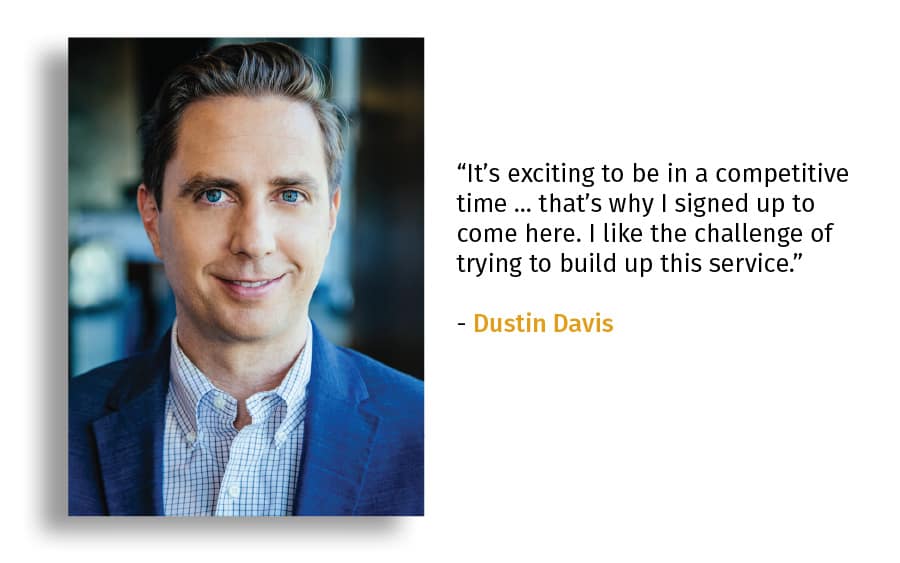
Dustin Davis is the Head of Comedy Development and Current Programming for YouTube Red (Premium). He spoke with JHRTS member Charlie Chappell about the success of YouTube Premium’s Cobra Kai, the difference in traditional television and the emerging OTT market, and the future of online distribution. An edited transcript of the conversation follows.
Can you tell us about your background and what made you want to work in entertainment?
I’m from Houston, Texas originally. I always wanted to work in television specifically. It wasn’t like, it may be movies. I think growing up I wanted to work in late night television and I moved to New York to pursue that. I interned at The Daily Show and worked at Letterman for a little bit. Then I moved out to L.A. with the idea of being a comedy writer, writing for TV. Then I landed a development job at Spike TV, and decided that, for me, I liked the intersection of the business meets the creative. It was something where I didn’t really know what development was. I got to learn on the job and had some really good mentors there. That was my first entrance into TV development.
Then I moved over to ABC and worked in current programming for 5 years. That was like going to college. The volume, you know, I worked on over 300 hours of TV. I got a really good sense of how the business works and learned so much. And then this opportunity opened up and then I moved over here to YouTube.
How did you get involved with the HRTS?
My former intern was a member of JHRTS and she would occasionally bring me in and invite me to networking events or to be a mentor. So I started to do the mentorship program over the past couple years.
Then Amanda Barclay, who is an executive on the comedy team here, was really a champion and saw a lot of value in HRTS for us as a company. Value in bringing visibility to YouTube Premium as a platform. Everyone has a seat at the table at HRTS, and a presence there. And she nudged us and we all sat around and said, “yes, we should try to get more involved and have a presence there.”
What is a favorite memory from your career so far?
I have a couple.
I’d say Blackish getting nominated for an Emmy was really cool. That was very exciting. I love that show. I love that team. So to be a part of that was really fun and really gratifying.
And of course, here, coming to this new platform and launching a new show that has been as successful as Cobra Kai has been. Seeing the response both critically and commercially has been really satisfying. That’s a labor of love that I give all credit to the creators of that show, Jon Hurwitz, Hayden Schlossberg, and Josh Heald. They kind of came in with this vision and saw it through. I put a lot of trust in them and they delivered, so that’s been a highlight for sure.
If I’m being completely honest I was surprised by how good this show was, and now I can’t stop watching it. You had an unexpected hit with Cobra Kai and the show still enjoys a 100% Tomatometer on Rotten Tomatoes. Did anyone think this show was going to do so well?
I can tell you, it was a big bet for us. YouTube taking a big swing and taking a shot on picking up a series without a script. They came in with a very clear vision for the script and I was won over by it. And I felt like, if we were gonna take a big swing, this is as good a bet as just about anything for us.
We knew looking at Google and YouTube data that Karate Kid was big on YouTube. People loved to watch clips of it. So there was an audience and we all hoped it would be successful, but honestly the answer is, no.
You said you were candidly a little surprised it was as good as it was, and that was my favorite part of the reviews. They contained the word “actually.” The show was “actually” good. I give credit to the creators of the show. The tone they were able to do is so hard, to capture it is really difficult. It was not a parody, it was not a Funny-or-Die sketch. Those things have been done before. This was “how do we make this contemporary but still hold onto the nostalgia.”
It’s been really fun.
What do you think has contributed its success?
I think it was a confluence of things. A great idea. Original actors who can still deliver. Coming at it from a fresh angle and surprising people. And solid marketing by our YouTube team here. We went after it in a big way and made sure people knew about it. We have this massive funnel of people coming to YouTube every day and it was our job to say we have this great property that we believe in, so let’s make sure people know about it. So put it in everyone’s feed, make sure people are talking about it.
Our marketing team did a good job about creating the awareness, and then word of mouth of people really enjoying the show carried it the rest of the way.
How do you think YouTube can replicate this kind of success?
Of course you’d love to have every show you do be that successful. I can say in Season 2 we’re looking to replicate that success. I have a slate of shows coming up at the end of the year and the beginning of 2019 that I’m really excited about and really proud of.
I worked on Happy Endings at ABC – another show that I’m really proud of. And that team was so great to work with. David Caspe, and a couple other writers from that show, the Libman brothers, Daniel and Matthew, and another collaborator of theirs, their other friend that grew up with them all, Jordan Cahan, they all actually grew up together outside of Chicago and they all came together and had this idea, and we said let’s make this show. It stars Adam Pally and Sam Richardson and it comes out later this year. Very excited about that one, I think people are really gonna like it.
Another one I’m excited about just premiered at Tribeca and is called Wayne. It’s from a writer named Shawn Simmons and it was overseen by Reese and Wernick, the writers of Deadpool. This is one of those scripts that comes to the door and you know “I have to make this show.”
It was one of those things that felt different and new and fun. It’s an action comedy, like what was Dirty Harry like when he was 16. He had a code about him, lived by his own rules and he was an honorable guy. It’s that character meets True Romance meets Napoleon Dynamite. It is really fun and violent and funny. I think it’s going to get a big push here.
One of your first gigs was as an intern at The Daily Show, with Jon Stewart having taken the helm about a year before. What early lessons have you brought with you throughout your career?
I would say working there is “treat each other well.” That place was full of very nice people, at least from my experience. I was an intern. Everyone there felt like they were doing important work. And you know, you’re working together a lot and tempers can flare, especially when you’re around the 2000 election. But everyone was so nice and treated even the interns so well.
It shows, in that a lot of the people who were there in 2000 are still there. The woman who hired me, Jen Flanz, is now the executive producer of the show. And a lot people have remained there because people like working there.
You’ve worked in several different aspects of the entertainment industry: As a PA for the Image Group, an intern for The Daily Show, as an agent’s assistant and as a production coordinator and writer for local TV — all before landing at Spike and then ABC and now YouTube. How valuable do you think it is to have such a diverse experience with benefit of 20/20 hindsight?
I always tell people, there’s not one path to getting where you want to be. If you have a goal for yourself, and have a general idea of where you want to end up, there are many different roads you can take. I feel like working in different areas and getting different experiences, making contacts and making new connections while trying to do your best everywhere you go — as long as you’re not making big detours and you’re working towards where you want to be — it doesn’t really matter where you go.
You worked over ten years in traditional television, with over five of those years at Spike and the other five at ABC network. Using that as context, what challenges does the new original space at YouTube bring, that weren’t present in cable and network programming?
The easy answer is competition across the board for talent and writers and directors. I think you see there are so many other platforms in the content space, but it’s also exciting. It’s exciting to be in a competitive time. It’s a challenge, but that’s why I signed up to come here. I like the challenge of trying to build up this service.
YouTube is a subsidiary of Google, which is a tech company and all the other companies I’ve worked for are media companies. It’s kind of the marriage of a media company and a tech company that presents some challenges. But they’re challenges I came into with open eyes. YouTube has a lot of things going on, but at the core it’s a video platform and so I saw the potential to take our subscription service and carve it out from the bigger YouTube service.
I truly feel that people don’t really care where they get their shows. It doesn’t matter where the platform is or what it is. I think we’ve demonstrated that with Cobra Kai, Step Up, Impulse and a few others that are coming. We’ve demonstrated that we can get eyeballs on shows. I feel like creators don’t care either, as long as people have access to their shows and hopefully we’re demonstrating that.
What are the advantages to working in the OTT and MVPD space compared to what you used to do?
I think in the demographic we’re going after, a lot of people don’t have cable and don’t watch television. You’ve seen the charts of the steady decline of regular television. Everyone wants on-demand service on every device. That’s the good thing about being here at YouTube. We’re on everyone’s phone. The distribution is there. We’re in every smart TV and every device. So now it’s our job to fill that pipeline with shows that people care about.
I really enjoyed Rob Hubel’s Do You Want To See a Dead Body? Again, frankly I was a bit surprised by the talent you drew to this show, from Adam Scott and Terry Crews in the pilot, to Alexandra Daddario and Judy Greer in later episodes. Is star power as important to YouTube? And if so, why is it important given the power of data you control?
Star power only means so much. Without the execution of the idea, as we’ve seen time and time again, stars come to TV and their show doesn’t perform. I think that show works because of Rob, because of how talented and how funny he is. He’s such a joy to work with, and those people you saw only came because of Rob and to have fun.
It helps bring awareness and credibility occasionally. Like we’re doing a project with Kirsten Dunst, it’s a drama that I’m not even covering, but I’m really excited and bullish on it. A: It started with an amazing script, and a clear vision and a team that can execute on it, and B: having Kirsten say “I’ll bet on this upstart platform of YouTube Premium.” It helps, but having stars is not everything for us.
In Ryan Hansen Solves Crimes, there are a lot of really funny bits poking fun at the entertainment industry in general. One bit takes YouTube Red to task, specifically, referring to it as “YouTube Red, it’s like YouTube but not free…real great business model,” while also slamming network TV for being “creatively bankrupt.” Of course, all of this said in the service of comedy, how much creative freedom does the mothership of YouTube allow the content creators to develop and script these shows?
I’d say a lot, within certain parameters.
Rawson Thurber, who is a very successful writer and director and great person, had the vision for the show. He came in and had written the pilot script you saw. YouTube wasn’t in the script initially and we allowed them to kind of go for it.
You can’t take yourself too seriously. We want to be able to laugh at ourselves and that was really important. They came in and were dancing around “how far can we actually go?” And my boss Susanne Daniels, to her credit, was like “go for it, let’s have fun.”
There’s no reason to not poke fun at ourselves – as long as it’s funny. Also, it’s being said by national treasure Ryan Hansen who’s the sweetest human on the planet. We’re actually doing Season 2 right now where they have fun with our name change from YouTube Red to YouTube Premium.
There are 400 hours of video uploaded every single minute, how do YouTube Originals cut through the noise and attract an audience commensurate to other OTT services?
It’s difficult. No one will say it’s not. Everyone has the same problem. How do you cut through? I think it’s with good material. Placing smart bets and taking chances and taking risks. Cobra Kai is a great example. It’s this show that has a built-in IP. Ultimately, I think awareness these days is half the battle. Are you aware of the project? Just getting people there. Then it has to be good.
It’s a combination of marketing and having a really good execution on the material. I think really good shows find an audience. I believe that. I think if you’re doing really good work, people will talk about it. People will find it. Again it doesn’t matter where, as long as it’s good. So it’s incumbent on us to try and make the best shows possible because it’s not good enough to just have the least objectionable TV anymore.
A quick question about transitioning from free YouTube to the paid service. For context, you have Rhett & Link whose show Buddy System was the #1 digital series in the U.S. in 2017. How do you take huge YouTube hits like Rhett & Link and bring them into the Premium model? And do you or they worry that this transition behind the paywall into a more formal production process will affect their brand and popularity?
I think for them, it’s something they always wanted to do, a scripted show. This show, specifically the first season, pre-dated me. I came in on Season 2. This is something of a goal they had. And they’re so talented. There are a lot of people doing scripted on YouTube and I think for the talented ones, for the people who are invested in it and can have some crossover appeal, we’re going to lean into them.
We always bring up the example of Issa Rae on Insecure. She was on the platform before she made the leap over to HBO. That show is so great and she’s so talented, and for that next generation we want to make sure we’re keeping an eye on them and nurturing them. If they want to have a place to do more ambitious projects, we’d love to be the home for that.
Rhett & Link was like that for us, they have this rabid audience for their daily show, so let’s support them. And if they want to do something ambitious let’s make sure they stay here. I think Season 2 was even more ambitious and even more rewarding for them. And that’s a credit to how talented those two guys are.
What do you think the future holds for content distribution online?
That’s a big question. Basically what we’ve seen over the last 5 years is the breaking down of the cable bundle and now we’re seeing a version of it being built back up. Instead of paying your cable company $150, you’ll pay a handful of direct-to-consumers and you can choose the ones that are more tailored to you.
What show do you think people should watch on YouTube Originals?
I think people are going to be talking about Wayne, which is coming out next year. And that’s obviously after they finish watching Season 1 of Cobra Kai and we’ll shortly after have Season 2.
——————————————————————————————————————————-
*Charlie Chappell is a member of JHRTS. He is an actor and producer who is equally at home on both sides of the camera and microphone. You’ll be able to see him next working under the direction of Vincent D’Onofrio, across from Dane DeHaan and Ethan Hawke in The Kid. His producing experience spans more than a decade of Los Angeles-based physical and post-production and his latest venture into podcasting, Placing Faces, features some of the most influential casting directors in Hollywood and across the entertainment spectrum. He can be reached at [email protected]